Assessing the Feasibility of Android-Based Learning Media for Common Rail Diesel System Maintenance: Perspectives of Media and Content Experts
Keywords:
Android-based learning media, Vocational education, Expert validation, Mobile learning, Common rail diesel maintenanceAbstract
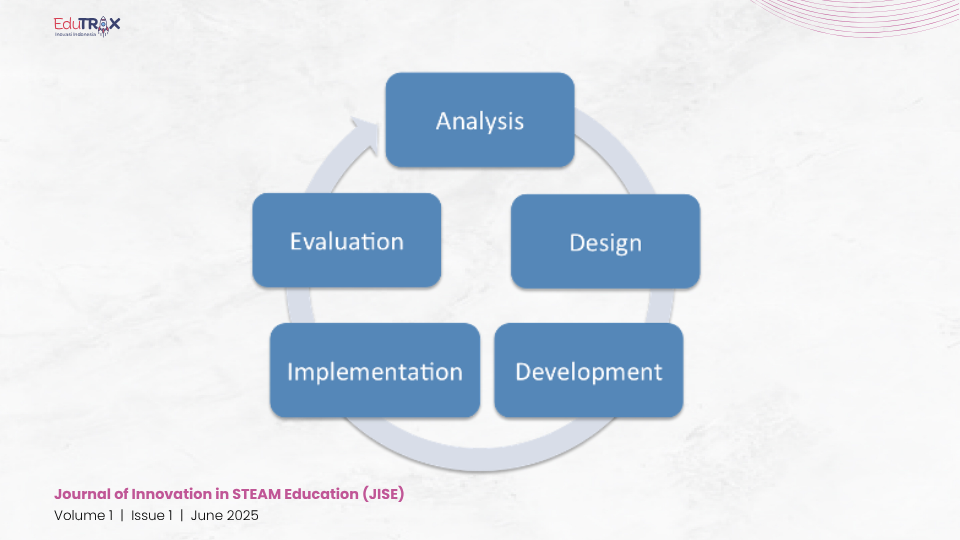
This study evaluates the feasibility of Android-based learning media developed to support the teaching of Common Rail diesel fuel system maintenance in vocational education. The need for mobile and interactive instructional tools is critical in Indonesia’s vocational schools, where traditional teaching methods are often insufficient to address the complexity of modern automotive systems. The learning media was designed using the ADDIE model and assessed through expert validation involving both content and media specialists from academia, industry, and government. Content experts evaluated the accuracy, completeness, and instructional value of the material, while media experts assessed its usability, navigation, and audiovisual quality. The validation process revealed that the content received a feasibility score of 85%, categorized as “Very Feasible,” and the media design scored 80%, indicating it is “Feasible” for instructional use. Suggestions from experts were implemented, including refining learning objectives, expanding assessment items, improving narration clarity, and enhancing user interface functionality. Although the media platform limited certain features such as image zooming, overall usability and pedagogical alignment remained strong. These findings confirm that Android-based learning media is a viable tool for enhancing instructional effectiveness in vocational automotive programs. The study contributes to the growing body of research supporting mobile learning in technical education, highlighting the role of expert validation in ensuring media quality. It recommends further empirical testing with students to evaluate learning outcomes and suggests future integration with technologies like augmented reality and AI-based customization. This work demonstrates the potential of mobile learning to modernize vocational education and better prepare students for industry demands.
References
Abd Karim, R., Mustapha, R., & Universiti Pendidikan Sultan Idris, Tanjong Malim, 35900, MALAYSIA. (2022). TVET Student’s Perception on Digital Mind Map to Stimulate Learning of Technical Skills in Malaysia. Journal of Technical Education and Training, 14(1). https://doi.org/10.30880/jtet.2022.14.01.001
Abul, S. adri ar, Dlis, F., & Humaid, H. (2020). THE EFFECT OF LEARNING MEDIA AND MOTIVATION ON THE RESULTS OF LEARNING DRIBBLING PASSING IN FOOTBALL GAMES IN STUDENTS (INDONESIA). JIPES - JOURNAL OF INDONESIAN PHYSICAL EDUCATION AND SPORT, 6(02), 11–18. https://doi.org/10.21009/JIPES.062.02
Achten, W. M. J., & Verchot, L. V. (2011). Implications of biodiesel-induced land-use changes for CO2 emissions: Case studies in Tropical America, Africa, and Southeast Asia. Ecology and Society, 16(4). https://doi.org/10.5751/ES-04403-160414
Ahmad Arif, Muslim Muslim, Wagino Wagino, Nuzul Hidayat, & M. Yasep Setiawan. (2020). Unemployed Skills in Maintenance and Service of Electronic Fuel Injection Motorcycle. AUTOMOTIVE ENGINEERING EDUCATION JOURNALS, 1(1).
Ajudia, M. K., Kolte, M. T., & Sarkar, P. (2014). DESIGNS OF INPUT AND OUTPUT DRIVER CIRCUITS FOR 16-BIT ELECTRONIC CONTROL UNIT (ECU) AND DEVELOPMENT OF CONTROL STRATEGY FOR ECU USING THESE I/O DRIVER CIRCUITS. International Journal of Research in Engineering and Technology, 03(05), 102–106. https://doi.org/10.15623/ijret.2014.0305021
Arfianti, L. (2022). Development of Engineering Drawing Learning Module for Vocational Student at Property Construction Business Expertise Program. Jurnal PenSil, 11(1), 65–77. https://doi.org/10.21009/jpensil.v11i1.18950
Branch, R. M. (2009). Instructional Design: The ADDIE Approach. Springer US. https://doi.org/10.1007/978-0-387-09506-6
Cahyono, D. N., Khumaedi, M., & Hadromi, H. (2021). The Impact of Audio-Visual Media toward Learning Result in the Subject of Seizing Picture. Journal of Vocational and Career Education, 6(1), 1–10.
Chang, L. & Mohamad Jafre Bin Zainol Abidin. (2024). Instructional Design of Classroom Instructional Skills Based on the ADDIE Model. Technium Social Sciences Journal, 55, 167–178. https://doi.org/10.47577/tssj.v55i1.10676
Deng, Y., Liu, P., & Xu, C. (2024). Research on Application Mode of ADDIE Model in Programming Course. In P. Qi & Z. Chen (Eds.), Proceedings of the 2023 4th International Conference on Big Data and Informatization Education (ICBDIE 2023) (Vol. 178, pp. 765–774). Atlantis Press International BV. https://doi.org/10.2991/978-94-6463-238-5_100
Douglas, D. (2020, September 18). Indonesia and Vocational Training (TVET). Https://Www.Gsineducation.Com/Blog/Indonesia-and-Vocational-Training-Tvet.
Ghozali, F. A., Tentama, F., Sudarsono, B., Syamsuddin, A., Setyanto, B. N., & Bhakti, W. P. (2023). Development of a Conveyor-Based Practice Performance Assessment Tool with Android Control to Improve Vocational High School Students’ Work Readiness. Elinvo (Electronics, Informatics, and Vocational Education), 8(1), 38–43. https://doi.org/10.21831/elinvo.v8i1.57868
Haryanto, Kusuma, W. M., Mutohhari, F., Nurtanto, M., & Suyitno, S. (2021). Innovation Media Learning: Online Project-Based Learning (O-PBL) on Drawing Competence in Automotive Engineering Using Video on YouTube. Journal of Physics: Conference Series, 2111(1). https://doi.org/10.1088/1742-6596/2111/1/012020
Hidayat, H., Isa, M. R. M., Tanucan, J. C. M., Rahmawati, Y., Anwar, M., Saputra, H. K., & Sabrina, E. (2024). Metacognitive Awareness Determination through Technology: A Problem-Solving Android Gamification App. International Journal of Information and Education Technology, 14(8), 1099–1108. https://doi.org/10.18178/ijiet.2024.14.8.2138
Iman, A., Raharja, R. M., Alim, A., & Sofiyani, K. (2022). Design of Vocational Assistance Management System for Vocational Schools Base on Android Applications. 7(2).
Mayer, R. E. (2009). Multimedia Learning (2nd ed.). Cambridge University Press. https://doi.org/10.1017/CBO9780511811678
Ministry of Education and Culture. (2021). Strategic plan for vocational education in Indonesia 2020-2024. Government of Indonesia.
OECD. (2024). PISA Vocational Education and Training (VET): Assessment and Analytical Framework. OECD. https://doi.org/10.1787/b0d5aaf9-en
Retno Mayasari Harijadi Gunawan BW Azzah Balqis Sabbah Andri Setiyawan, S. H. (2021). Relevance of Vocational High School Curriculum with Civil Engineering Vocational Education. Conference: Proceedings of the 2nd Vocational Education International Conference, VEIC 2020, 27th August 2020, Semarang, Indonesia.
Rizky, A., & Nauri, M. (2020). PENGARUH PENGGUNAAN BIOSOLAR DAN PERTAMINA DEX TERHADAP DAYA MESIN DAN EMISI GAS BUANG PADA MESIN DIESEL 4N15 COMMONRAIL. 4(1), 9–16.
Rosdiyanti, C., & Kaharmen, H. M. (2020). Pengaruh Penggunaan Jenis Bahan Bakar Solar20,Dexlite B20 Dan Pertamina Dex Terhadap Opasitas,Daya dan Konsumsi Bahan Bakar pada Innovadiesel Common Rail. Jurnal Keselamatan Transportasi Jalan, 7(1), 76–82.
Setiyawan, A., Alvindo, R., Kurniawan, A., & Manggalasari, L. C. (2023). Innovation of Cooling System Learning Media Android-Based Air Using Smart Apps Creator for Vocational High School Students. Journal of Vocational Education Studies, 6(2), 289–301. https://doi.org/10.12928/joves.v6i2.8812
Setiyawan, A., Fitriyana, D. F., Bahatmaka, A., Firmansyah, H. N., Darsono, F. B., Aryadi, W., Kriswanto, Roziqin, A., & Naryanto, R. F. (2023). Diesel Engine Performance using Pertamina Dex and Biodiesel (B30) on RPM and Fuel Consumption. IOP Conference Series: Earth and Environmental Science, 1203(1), 012010. https://doi.org/10.1088/1755-1315/1203/1/012010
Setiyawan, A., Lavicza, Z., Cahyono, A. N., & Bautista, G. (2025). Innovative Media for Teaching and Learning Engineering Drawing: Opportunities for Future Learning and Research. International Journal of Engineering Education, 41(2), 398–408.
Setiyawan, A., Suwahyo, S., Darsono, F. B., Asri, S., & Ekarini, F. (2023). Design of Wireless Engine Diagnostic Tool with Raspberry Pi for Learning Media Vocational Education Teacher Candidates. VANOS Journal of Mechanical Engineering Education, 8(1), 106–117.
Sugiyono. (2017). Metode Penelitian Pendidikan (Pendekatan Kuantitatif, Kualitatif dan R&D). Alfabeta.
Vogl, S., Schmidt, E.-M., & Zartler, U. (2019). Triangulating perspectives: Ontology and epistemology in the analysis of qualitative multiple perspective interviews. International Journal of Social Research Methodology, 22(6), 611–624. https://doi.org/10.1080/13645579.2019.1630901
Downloads
Published
Issue
Section
License
Copyright (c) 2025 Adhitya Muhammad Firdaus, Andri Setiyawan, Abdurrahman, Deni Fajar Fitriyana, Ebenezer Bonyah, Rachmad Syarifudin Hidayatullah, Guilermo Bautista, Jr. (Author)

This work is licensed under a Creative Commons Attribution-ShareAlike 4.0 International License.